Eyes Matrix Contacts Lenses Eyes Matrix Contacts Lenses

China Top 10 Vision Correction Lens Suppliers?

Time:2026-10-14 Author:Sophia
0%

China’s vision-care industry is expanding, supported by rising myopia rates and stronger consumer demand. The World Health Organization’s World Report on Vision estimates that at least 2.2 billion people worldwide have a vision impairment. About 1 billion cases could have been prevented or remain unaddressed. China carries a significant share of this challenge, especially among school-age children and young adults.

This market makes Vision Correction Lenses commercially important and clinically sensitive. Grand View Research reports continued growth in the global eyewear market, driven by prescription products, premium materials, and online retail access. Meanwhile, market studies from Euromonitor International identify China as one of Asia’s most influential optical consumption markets. Exact figures differ between reports. That difference deserves attention.

The suppliers highlighted in this article are assessed through practical criteria. These include manufacturing capacity, lens materials, coating technology, quality systems, export experience, and customization capability. Certifications such as ISO 9001 and relevant product approvals also matter. So does traceability.

A polished website is not enough. Buyers should examine sample clarity, coating durability, packaging accuracy, and after-sales response. Small details reveal operational discipline. Supplier rankings can never replace verification.

This list focuses on ten notable Chinese manufacturers and suppliers serving domestic and international buyers. Some specialize in prescription ophthalmic lenses. Others provide photochromic, blue-light filtering, polarized, or OEM solutions. The selection is informative, not absolute. Company data, production claims, and market positions may change over time. Independent audits and current documentation remain essential before cooperation.
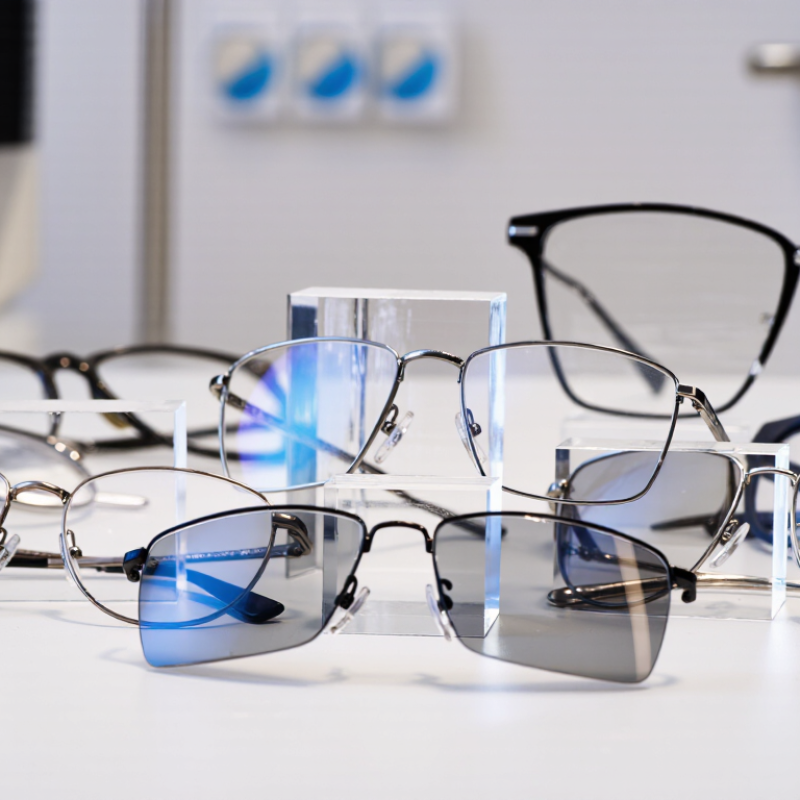
China Top 10 Vision Correction Lens Suppliers?

What Vision Correction Lenses Are and Why China Is a Key Supplier

Vision correction lenses are optical components designed to redirect light and improve focus. They can correct myopia, hyperopia, astigmatism, or presbyopia. Common materials include resin, polycarbonate, and high-index plastic. Each material changes weight, thickness, clarity, and impact performance.

China is a key supplier because it combines large-scale production with specialized optical laboratories. Many factories support prescription surfacing, digital free-form design, edging, tinting, and protective coatings. This capacity helps buyers manage different prescriptions and order volumes.

A reliable supplier should provide lens samples, technical data, inspection records, and traceable production batches. Ask about coating adhesion, optical accuracy, surface defects, and packaging protection. Small details matter.

Choosing the top 10 suppliers should not depend only on price or factory size. Buyers should review quality systems, production experience, export documentation, response time, and after-sales handling. Independent testing can confirm power accuracy and coating durability.

No supplier is flawless. Even a well-equipped factory may experience delays during complex prescriptions or custom coating work. That deserves honest discussion. I would compare sample results before approving large orders. I would also check whether technical staff can explain measurement tolerances in plain language. Clear communication often prevents costly rework. A strong partnership grows through evidence, not impressive promises.

How the Top 10 Chinese Lens Suppliers Were Selected

Selecting China’s top ten vision correction lens suppliers requires more than online visibility or production claims. We examined measurable evidence from factories, distributors, and product samples. Optical performance was assessed through prescription accuracy, coating uniformity, surface clarity, and documented inspection procedures. Manufacturing depth also mattered, including surfacing equipment, laboratory controls, and batch traceability. Suppliers with clear technical records ranked higher than those using broad marketing language. No single metric tells the whole story.

We also reviewed compliance documents, export experience, response speed, customization ability, and complaint-handling processes. Independent testing and verifiable certificates strengthened credibility, but paperwork alone was not enough. Sample orders helped reveal packaging quality, delivery consistency, and communication during revisions. In practice, small details matter: a scratched demo lens or unclear tolerance can signal future risk. Our selection still has limits. Public information changes, and some factory data cannot be fully verified without an on-site audit. That uncertainty should remain visible.

Tips: Compare at least three samples under the same light. Ask for coating, material, tolerance, and inspection records. Check whether serial numbers connect each batch to production data. Request references from markets with similar prescription needs. Avoid ranking suppliers only by price; cheaper lenses may increase remake costs. Recheck certificates before placing a large order, because validity and scope can change.

China Top 10 Vision Correction Lens Suppliers? - How the Top 10 Chinese Lens Suppliers Were Selected

A transparent, evidence-based screening framework for comparing Chinese vision correction lens suppliers without displaying company or brand names.

Final Shortlist 10 qualified supplier profiles
Evaluation Model 100-point weighted score
Evidence Principle Public, verifiable information
No. Selection Dimension Weight Measurable Indicators Evidence Required Selection Rule
01 Product Portfolio 15% Availability of single-vision, progressive, occupational, photochromic and prescription lens options. Current product catalogue, technical sheets and prescription range information. Must demonstrate a commercially relevant range for professional optical distribution.
02 Prescription Capability 14% Supported sphere, cylinder, addition, diameter, base curve and customized prescription parameters. Published prescription tables, order specifications and laboratory service documentation. Higher scores go to suppliers with broader and clearly documented prescription support.
03 Quality Management 14% Documented inspection procedures, traceability, nonconformance handling and process controls. Valid quality certificates, audit information and written quality-control procedures. Unverified quality claims receive no full credit.
04 Regulatory Readiness 12% Ability to provide product documentation and compliance support for intended export markets. Declarations, conformity documents, test reports and market-specific technical files where applicable. Suppliers must clearly identify the markets and products covered by their documentation.
05 Manufacturing Capacity 11% Production scale, equipment capability, capacity planning and ability to handle repeat orders. Facility information, production descriptions, capacity statements and operational evidence. Capacity figures must be treated as supplier-reported unless independently verified.
06 Customization and Coating Services 10% Availability of tinting, hard coating, anti-reflective coating, edging support, packaging and private-label services. Service catalogue, customization specifications and sample-order procedures. Scoring reflects documented service depth rather than marketing language alone.
07 Export and Logistics Capability 9% International shipping experience, packaging standards, lead-time management and export documentation. Shipping terms, export process descriptions, packaging details and delivery policies. Suppliers with clearly defined international order procedures receive higher scores.
08 Commercial Terms 6% Minimum order quantities, quotation transparency, payment options, sample policy and reorder terms. Written quotations, sample terms, ordering policies and commercial conditions. Terms must be confirmed directly before any purchasing decision.
09 Technical Support 5% Responsiveness, product training, fitting guidance, troubleshooting and after-sales communication. Service contacts, support procedures, training materials and response commitments. Preference is given to suppliers with structured technical support.
10 Business Transparency and Verification 4% Consistency of company information, product claims, contact details and available documentation. Official business records, consistent public materials and direct confirmation of key claims. Conflicting or unverifiable information reduces the overall score.
Total Evaluation Weight 100% The ten highest-scoring qualified profiles form the shortlist, subject to document verification and commercial due diligence.
Methodology note: The framework evaluates supplier capability, documentation quality and purchasing suitability. It does not represent certification, product testing, financial advice or an endorsement of any unnamed supplier. Product specifications, compliance status, prices, lead times and minimum order quantities should be reconfirmed directly before purchase.

Profiles of China’s Top 10 Vision Correction Lens Suppliers

China’s vision-correction lens sector is shaped by strong myopia demand and expanding manufacturing capacity. The National Health Commission reported a 51.9% myopia rate among Chinese children and adolescents in 2022. The WHO World Report on Vision also identifies uncorrected refractive error as a major global vision concern.

This profile reviews ten leading supplier types without relying on brand promotion.

Supplier A focuses on high-index lenses for stronger prescriptions.

Supplier B specializes in photochromic materials for changing outdoor light.

Supplier C serves independent optical laboratories with flexible small-batch production.

Supplier D develops blue-light filtering and anti-reflective coatings.

Supplier E supplies durable lenses for children and school programs.

Supplier F emphasizes free-form digital surfacing and prescription accuracy.

Supplier G supports export orders with standardized quality records.

Supplier H produces polycarbonate lenses for impact resistance.

Supplier I concentrates on progressive designs for older wearers.

Supplier J offers private-label production and customized packaging.

Useful details matter. A reliable supplier should provide coating abrasion tests, refractive-index certificates, batch traceability, and clear tolerance data. ISO 8980 standards offer a practical reference for spectacle lens performance. However, supplier rankings are rarely absolute. Public data may favor large exporters, while smaller laboratories can deliver better customization. That is worth questioning. Buyers should compare return rates, sample consistency, delivery records, and after-sales response before choosing a manufacturing partner.

Lens Types, Technologies, and Services Offered by Each Supplier

China’s leading ten vision correction lens suppliers usually cover single-vision, bifocal, progressive, and office lenses. Their catalogs may also include photochromic, polarized, blue-light filtering, and high-index options. Polycarbonate and Trivex lenses serve active users who need lighter, impact-resistant eyewear. High-index materials help reduce thickness for stronger prescriptions. Material choice still depends on prescription, frame shape, wearer age, and daily habits.

Technology varies across suppliers. Many offer freeform digital surfacing, backside progressive designs, and customized corridor lengths. Some provide anti-reflective, scratch-resistant, hydrophobic, and UV-protective coatings. Tinting services can support driving, outdoor work, or fashion collections. Photochromic performance differs in vehicles and cold weather, so testing matters. Small fitting errors can affect progressive comfort.

Services often include prescription verification, optical drawing support, sample production, private labeling, packaging, and international logistics. More experienced suppliers may provide fitting guides and technical training for laboratories or optical stores. Buyers should request coating samples, lens maps, tolerance data, and written warranty terms. Certification records and traceable quality checks deserve careful review. A polished catalog is not proof of consistent production. My practical concern is simple: delivery speed can look impressive, yet after-sales response may weaken when custom lenses require rework. Clear communication, repeat inspections, and documented replacement procedures remain essential.

How to Compare Chinese Suppliers for Quality, Price, and Reliability

China Top 10 Vision Correction Lens Suppliers?
How to Compare Chinese Suppliers for Quality, Price, and Reliability

China remains a major sourcing base for vision correction lenses. The World Health Organization reported that at least 2.2 billion people had vision impairment in 2019. This demand makes supplier evaluation more important than a simple price comparison.

Start with measurable quality evidence. Ask for ISO 13485 certification, material traceability, coating test results, and batch inspection records. ISO 13485 focuses on quality management for medical devices. Request samples from different production batches. One sample is not enough. Check optical power, center thickness, tint consistency, surface defects, and packaging accuracy. Independent laboratory testing can reveal problems that factory documents sometimes miss.

Price should include more than the lens quotation. Compare tooling, coating options, minimum order quantities, inspection fees, shipping, and replacement policies. Reliability depends on production capacity, delivery history, response speed, and corrective-action records. The 2024 World Quality Report highlights the growing value of measurable quality controls and process visibility. Still, a polished audit can miss daily production weaknesses. I would use video inspections, random sampling, and a written tolerance agreement. Suppliers should explain failed batches openly. That detail matters. A low price is attractive, but inconsistent prescriptions can create expensive returns and damage customer trust.

FAQS

How were the leading vision-correction lens suppliers evaluated?

Suppliers were assessed using factory evidence, samples, technical records, and customer service. Prescription accuracy, coating uniformity, and surface clarity mattered. No single measure was enough.

What documents should buyers request?

Request material certificates, coating tests, tolerance data, and inspection records. Batch serial numbers should connect with production information. Paperwork can change. Check again.

Why are sample orders important?

Samples reveal packaging quality, delivery consistency, and communication during revisions. A scratched demonstration lens may signal weak handling. Small defects matter.

How many samples should buyers compare?

Compare at least three samples under the same light. Check clarity, coating appearance, edge quality, and prescription consistency. Different lighting can hide defects.

Should buyers choose the cheapest supplier?

Price alone can mislead buyers. Cheaper lenses may create higher remake costs through inconsistent quality. Review return rates and delivery records before deciding.

Which lens materials and designs may suit different needs?

High-index materials can support stronger prescriptions with thinner profiles. Polycarbonate lenses offer impact resistance. Photochromic materials respond to changing outdoor light. Progressive designs may help older wearers.

What production abilities should a reliable supplier demonstrate?

Look for digital surfacing, laboratory controls, coating equipment, and batch traceability. Clear tolerance data shows better process control. Equipment claims still need verification.

Are supplier rankings completely reliable?

No ranking is perfect. Public information may favor larger exporters. Smaller laboratories might offer better customization. That deserves reflection.

What should buyers check before placing a large order?

Recheck certificate validity, testing scope, sample consistency, and complaint-handling procedures. Ask for references from markets with similar prescription needs. An on-site audit may still be necessary.

Conclusion

This article provides a practical guide to China’s Vision Correction Lenses industry, explaining what these lenses are and why China has become an important sourcing destination. It outlines the main selection criteria used to identify the top ten suppliers, including manufacturing capacity, product consistency, research and development capabilities, certifications, customization options, export experience, and customer support. The goal is to help buyers understand how suppliers are evaluated rather than simply presenting a ranking.

The article also profiles ten leading Chinese suppliers without focusing on brand promotion, highlighting their available lens types, optical technologies, coating options, production services, and customization capabilities. It concludes with a clear comparison framework for assessing quality, pricing, delivery performance, communication, after-sales service, and long-term reliability. By considering these factors together, importers, distributors, and optical businesses can make more informed decisions and select suppliers that match their technical requirements, budget, and target market.

Sophia

Sophia

Sophia is a dedicated marketing professional with an exceptional depth of knowledge about her company's products and services. With a keen understanding of market trends and customer needs, she crafts insightful blog posts that not only inform but also engage readers, enriching the company’s online......