Eyes Matrix Contacts Lenses
Choosing the best Contact Lens Cases for global buyers is not just a matter of color or price. A case sits beside a bathroom sink, travels in a toiletry bag, and protects lenses between uses. Small design choices matter: a tight cap, clearly marked left and right wells, smooth threads, and materials that withstand routine cleaning. Yet a polished product photo cannot prove a lid will stay secure after months of daily use.
For a reliable hygiene baseline, the U.S. Centers for Disease Control and Prevention (CDC) advises: “Never use water with your contact lenses.” Buyers should treat that guidance as essential, not as a product feature. It also makes clear why case instructions, labeling, and compatible lens-care directions deserve careful review. The CDC is an authoritative public-health source, though it is not an individual industry expert; a named personal quotation should be verified before publication rather than invented.
Global sourcing adds practical questions. Can suppliers provide consistent dimensions, material specifications, packaging details, and batch-level quality checks? Are replacement cases easy to obtain? Does the design open comfortably without loose hinges or awkward corners? These details are less exciting than a new finish. They may matter more. No single case suits every buyer or market, and a low unit price can hide weak quality control. This guide compares useful case types and purchasing criteria, while acknowledging a limitation: product claims still need independent verification. A careful shortlist starts with everyday usability, dependable construction, and clear care instructions—not appearance alone.
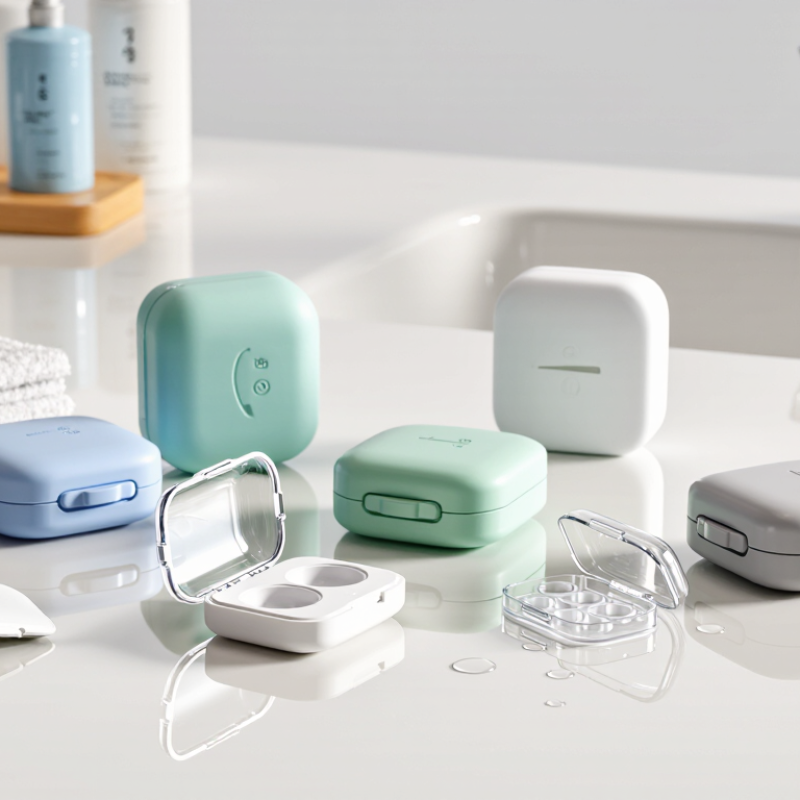
A contact lens case is a small, lidded container for holding lenses when they are not being worn. Each lens sits in its own compartment, covered with the recommended disinfecting solution. The case helps keep lenses together and shields them from dust, spills, and accidental contact with hands or other objects. It does not clean lenses by itself, and a closed lid does not make the case sterile. A cracked lid or cloudy interior is a good reason to check the care instructions and consider replacing it.
Tips: Wash and dry your hands before handling lenses. Use fresh solution as directed, never top up old solution, and avoid rinsing the case with tap water. Let it air-dry clean-side up.
For global buyers, practical details matter: secure screw-top lids, clearly marked compartments, and a compact shape can help during travel. Still, a sturdy case is only one part of lens hygiene. Follow the instructions supplied with your lenses and solution, since care routines can differ. It is easy to focus on color or size and overlook cleaning habits. I have found that a simple case is often easier to keep clean, though convenience alone is not a guarantee of safety.
Contact lens cases come in several practical types, each designed for a different buying need. The standard twin-well case separates the right and left lenses in two labeled compartments. It is compact, familiar, and easy to carry. Some versions use screw-top wells, while others have hinged lids for faster access. Screw-top designs may reduce accidental opening, but their threads need careful cleaning.
Flat travel cases fit neatly into small toiletry bags. Their shallow shape saves space, although the limited depth can make lens handling awkward. Taller cases provide more solution volume and may suit frequent travelers. Vented designs allow more airflow during drying, but they still require a clean, protected surface. A case should never be selected only for its appearance.
Materials also affect daily use. Medical-grade plastic is lightweight, affordable, and simple to replace. Smooth interior walls are preferable because fewer grooves can trap residue. Clearly marked lids help prevent lens mix-ups, especially for users with different prescriptions. Some buyers may prefer color-coded caps or textured lids for easier identification.
From practical handling experience, a case that opens easily is not always the safest choice. Loose hinges can collect residue or fail inside a bag. That detail is easy to miss. Buyers should check lid security, leak resistance, grip, and cleaning instructions before ordering. Fresh multipurpose solution should be used as directed by an eye-care professional, never tap water. Case replacement schedules vary, so supplier guidance and professional advice both deserve attention.
Material choice strongly affects contact lens case performance. Polypropylene is lightweight, chemical-resistant, and practical for daily production. High-density polyethylene can offer tougher walls for shipping and repeated handling. A soft silicone seal may reduce leakage around the cap, but poor molding can still cause gaps. Material alone is not enough.
In product evaluations, I check the case after filling it, closing it, and carrying it in a warm bag. A reliable case should keep the solution contained without oily odors or visible cracks. Smooth inner walls make cleaning easier and leave fewer places for residue. Separate right and left compartments also reduce handling mistakes. However, some rotating caps feel convenient but loosen over time. That detail deserves more testing.
Tips: Choose cases with clear volume markings and secure threads. Ask suppliers for material specifications, leak tests, and sample inspections. Check whether antimicrobial claims have independent evidence. Replace damaged cases promptly. Small habits matter. Fresh samples may perform better than bulk production, so buyers should inspect both. Temperature changes during global transport can expose weak seals, especially when packages are compressed. A case that passes a desk test may still fail inside a crowded shipment.
For 2026 contact lens case sourcing, hygiene should guide every buying decision. A clear case is not automatically a safe case. Buyers should request material specifications, production records, and independent laboratory results. Materials should resist cracking, staining, and chemical changes from lens solution. Biocompatibility evidence, such as ISO 10993 testing where applicable, can reduce skin-contact concerns. Chemical compliance may also require checks under regional rules, including limits on restricted substances.
The case should close firmly without trapping dirt around the threads. Test samples with repeated opening, closing, drops, and transport pressure. Inspect the wells, caps, and seams under bright light. Small grooves can hold residue. That detail matters. Leak testing is also important, especially for export shipments crossing hot and cold climates. Suppliers should provide batch identification and traceability. Do not accept “medical grade” as proof without supporting documents.
Clean packaging helps, but it does not make the case sterile. Buyers should verify whether the product is supplied clean, sanitized, or sterile, because these terms are not interchangeable. Clear cleaning instructions should match the recommended lens solution. Replacement guidance is useful, although suggested timelines vary by manufacturer and health authority. No checklist is perfect. Some buyers may focus heavily on price and overlook weak caps or missing test reports. A small pilot order, followed by user feedback and complaint review, can expose those problems before larger purchasing commitments.
Global buyers should evaluate contact lens case suppliers beyond unit price. The U.S. CDC reports that about 45 million Americans wear contact lenses. It also recommends replacing lens cases at least every three months. This creates steady demand, but quality failures can damage buyer trust. Ask suppliers for material specifications, leak-test records, hygiene controls, and batch traceability. ISO 13485 certification can support supplier credibility, although certification alone proves little.
Request samples from different production batches. Inspect thread fit, cap sealing, odor, surface scratches, and drainage performance. Test cases after repeated opening and closing. Small defects matter. A loose cap can turn a clean shipment into customer complaints. The FDA also stresses proper case cleaning and replacement, so packaging instructions should be clear and multilingual.
Cost evaluation needs more than the factory quotation. Calculate tooling, packaging, inspection, freight, insurance, duties, and currency movement. A 2024 Grand View Research estimate valued the global contact lens market at over USD 9 billion, showing strong demand but also intense price pressure. Buyers should compare landed cost per usable case, not price per carton. One overlooked issue is returns. Cheap products may become expensive after leakage claims and replacements. I would still question forecast accuracy, especially when freight rates and recycled-material prices change quickly. Supplier audits and independent testing remain safer than attractive spreadsheets.
It stores lenses in separate compartments when they are not being worn. A closed lid protects against dust, spills, and accidental contact. It does not clean lenses. It is not sterile.
Wash and dry your hands before touching the case or lenses. Use fresh disinfecting solution as directed. Never add new solution to old solution. Avoid tap water. Let the case air-dry with the openings facing upward.
A compact, flat case fits easily inside a small toiletry bag. Taller cases may hold more solution during longer trips. Check the case inside a crowded bag. Loose lids can leak.
Screw-top lids may resist accidental opening during travel. However, their threads can trap residue and require careful cleaning. Hinged lids open quickly but may loosen over time. Convenience is not safety.
Lightweight medical-grade plastic is easy to carry and replace. Polypropylene resists many chemicals and suits regular production. High-density polyethylene can provide tougher walls during shipping. Material alone is not enough.
Look for secure threads, marked compartments, smooth interiors, and leak resistance. Check the grip and cleaning instructions. Ask for material details, leak tests, and production samples. Desk testing can miss shipping failures.
Clearly marked right and left compartments reduce handling mistakes. Color-coded caps may help users identify each side quickly. This matters when prescriptions differ. Small labels help.
Replace it when the lid cracks, the interior becomes cloudy, or leakage appears. A damaged seal can expose the solution to contamination. Follow the supplied care instructions and professional advice. I may overlook wear until it becomes obvious.
Contact Lens Cases play an important role in keeping lenses protected between uses by providing a clean, secure place for storage. Global buyers can compare compact, travel-friendly, and multi-compartment designs, considering how each fits different users and routines. Material choice and practical features—such as secure closures, easy-to-clean surfaces, and clear labeling—can affect durability, convenience, and everyday performance.
When assessing options for 2026, buyers should prioritize hygiene guidance, product safety information, and consistent manufacturing quality. Comparing suppliers involves more than looking at unit price: review material specifications, production capacity, quality-control processes, packaging, shipping arrangements, and responsiveness. A balanced evaluation helps buyers choose contact lens cases that meet their needs for usability, dependable supply, and overall value.
